Arquivo da categoria: tristeza
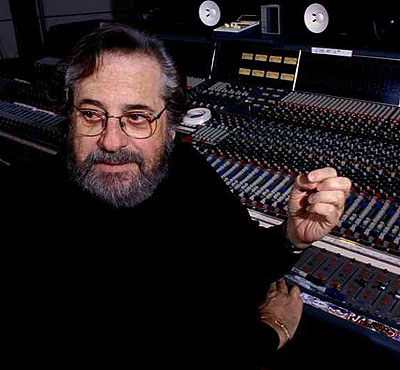
phil ramone (1934 – 2013)
Professional career
A & R Recording
In 1959, Ramone established an independent recording studio A & R Recording (the initials were derived from the last initials of Ramone and his then-business partner Jack Arnold). Later the partnership which owned the studio consisted of Brooks Arthur owning half while Ramone, Don Frey, and Arthur Downs Ward owned the other half.[8]
In the studio he quickly gained a reputation as a sound engineer and music producer, in particular for his use of innovative technology. Among those whose music he has produced are Clay Aiken, Burt Bacharach, The Band, Bono, Laura Branigan, Ray Charles, Karen Carpenter, Chicago, Peter Cincotti, Natalie Cole, Bob Dylan, Sheena Easton, Melissa Errico, Gloria Estefan, Aretha Franklin, Billy Joel, Elton John, Quincy Jones, Patricia Kaas, B. B. King, Julian Lennon, Shelby Lynne, Madonna, Barry Manilow, Richard Marx, Paul McCartney, George Michael, Liza Minnelli, Anne Murray, Olivia Newton-John, Sinéad O’Connor, Fito Páez, Luciano Pavarotti, Peter Paul and Mary, Andre Previn, Diane Schuur, Carly Simon, Paul Simon, Frank Sinatra, Rod Stewart, James Taylor, The Guess Who, Dionne Warwick and Stevie Wonder. He is also credited with recording Marilyn Monroe‘s intoxicated version of “Happy Birthday to You” to President John F. Kennedy.[2]
His early work in producing and engineering was with jazz artists, working on John Coltrane records and acting as engineer for the landmark Getz/Gilberto album in 1964, for which he won his first Grammy. He transitioned during the 1960s to working with folk-rock, pop-rock, and R&B acts such as Peter, Paul, and Mary, James Taylor,Aretha Franklin, and Bob Dylan, first primarily as an engineer, and later as a producer. He won his first production Grammy for his work on 1975’s Still Crazy After All These Years by Paul Simon. His breakthrough album became Billy Joel‘s 1977 album The Stranger and began a fruitful collaboration that would lead to Ramone producing a string of hit Joel albums throughout the rest of the 1970s and 1980s. In 1993, he produced Duets, Frank Sinatra‘s comeback album, a commercial hit that peaked at #2 on the Billboard Album Chart. During the rest of the 1990s, Ramone moved from production work to his primary role as an industry executive, serving as chairman of The Recording Academy, though he would still be involved in some studio work including several Broadway cast recordings, as well as helping produce, withQuincy Jones, the televised A Tribute to Brian Wilson in 2001.[9]
aTripaNova…


yeah!
( :
planetinha passou a girar mais lentamente…
ALVIN LEE
(1944 – 2013)
) :
a cara da indignação subiu…
(1917 – 2013)
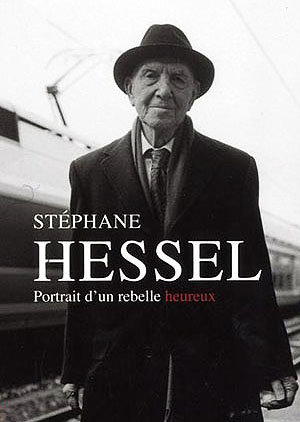
Stéphane Frédéric Hessel (20 October 1917 – 26 February 2013[1]) was a diplomat, ambassador, writer, concentration campsurvivor, French Resistance fighter and BCRA agent. Born German, he became a naturalised French citizen in 1939. He participated in the editing of the Universal Declaration of Human Rights of 1948. In 2011, he was named by Foreign Policymagazine to its list of top global thinkers. In later years, his activism focused on economic inequalities, protection for the post-WW2 social vision. and the palestinian conflict. His short book “Time for Outrage” (fr: Indignez-vous!) sold 4.5 millions copies worldwide. Hessel and his book were linked and cited as as an inspiration for Spanish Indignados (M15 movment), US Occupy Wall Street movement and multiple other political movements.
zeca…

(1954 – 2013)
leNda!
) :
mamãe…
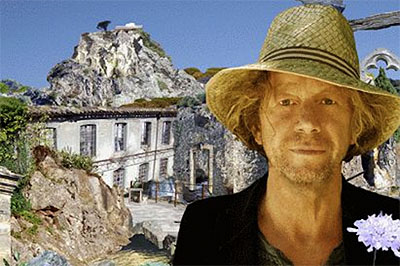
KEVIN AYERS
(1944 – 2013)
the guardian:
Kevin Ayers’s debut solo album, Joy of a Toy, released in 1969, concluded with a song called All This Crazy Gift of Time. “All my blond and twilight dreams,” sang Ayers in his signature, slightly wayward baritone, “all those strangled future schemes, all those glasses drained of wine …”
In retrospect, it sounds like a statement of intent, though intent is perhaps too strong a word to apply to Ayers, whose singular songwriting talent was matched by a sometimes startling lack of ambition. “I lost it years ago; a long, long time ago,” he told one interviewer in 2007, referring to his lack of ego and self-belief. “But, in a way, I don’t think I’ve ever had it.”
Ayers, who has been found dead at the age of 68 at his home in the medieval village of Montolieu in south-west France, was one of the great almost-stars of British rock. A founding member of Soft Machine, he was a key figure in the birth of British pastoral psychedelia, and then went on to enjoy cult status as a singer-songwriter in the late 1960s and early 70s. Among his champions were the late John Peel and the influential British rock journalist Nick Kent, who later wrote: “Kevin Ayers and Syd Barrett were the two most important people in British pop music. Everything that came after came from them.”
Ayers was born in Herne Bay, Kent, the son of the journalist, poet and BBC producer Rowan Ayers, who later originated the BBC2 rock music programme The Old Grey Whistle Test. After his parents divorced and his mother married a civil servant, Ayers spent most of his childhood in Malaysia, where, he would later admit, he discovered a fondness for the slow and easy life.
At 12, he returned to Britain and settled in Canterbury. There, he became a fledgling musician and founder of the “Canterbury sound”, an often whimsical English take on American psychedelia that merged jazz, folk, pop and nascent progressive rock.
Ayers’s first band was the Wilde Flowers, whose line-up included various future members of Caravan as well as Robert Wyatt and Hugh Hopper, with whom he would go on to form Soft Machine in 1966. Alongside Pink Floyd, Soft Machine played regularly at the UFO club in London, becoming one of the key underground groups of the time.
In 1968, the group toured the US in support of the Jimi Hendrix Experience, a brush with rock stardom and relentless gigging that left the laid-back Ayers weary and disillusioned. He sold his Fender bass guitar to Hendrix’s sideman Noel Redding, and fled to Ibiza with fellow Soft Machine maverick Daevid Allen. There he wrote the songs that would make up Joy of a Toy. It set the tone for much of what was to follow: Ayers’s sonorous voice enunciating songs that ran the gamut from wilfully weird to oddly catchy, the whole not quite transcending the sum of the many varied and musically adventurous parts.
Ayers recorded four critically well-received albums for the British progressive rock label Harvest, the third of which,Whatevershebringswesing (1972), featured musical contributions from Robert Wyatt and Mike Oldfield and the orchestral arrangements ofDavid Bedford. It included the dramatically melancholy Song from the Bottom of a Well and the catchy, more-roll-than-rock swagger ofStranger in Blue Suede Shoes, which became, if not quite a hit, a signature song of sorts in his subsequent live shows.
In his 2008 memoir, Changeling, Oldfield recalled the anarchic atmosphere of the recording sessions at Abbey Road studio, where, on a day that no other musician bothered to turn up, he more or less cut the backing track for Champagne Cowboy Blues single-handedly. “Eventually, Kevin rolled in. I said, ‘I’ve done it, I’ve done a track!’ He was a bit put out, I think, that I had taken over his studio time … He did keep it as a backing track: he put some different words to it and it was put on the album.”
Ayers signed to Chris Blackwell’s Island label. The resulting album, The Confessions of Dr Dream and Other Stories (1974), was more focused by his standards, and marked the beginning of a creative partnership with guitarist Ollie Halsall. The following year, Ayers’s appearance at the Rainbow Theatre in London alongside John Cale, Brian Eno and Nico was recorded for a subsequent live album entitled June 1, 1974.
In the late 1970s, as punk took hold in Britain, Ayers seemed to disappear from view, dogged by addiction and what often seemed like a general lack of interest in his own career. He made the lacklustre Diamond Jack and the Queen of Pain (1983) with a group of musicians he befriended in Spain, and the well-received Falling Up (1988) in Madrid.
For a while, he lived a reclusive life in the south of France, before being tempted back to the studio for an album, The Unfairground (2007), featuring contributions from a new generation of musician-fans that included members of Teenage Fanclub, Neutral Milk Hotel and Gorky’s Zygotic Mynci.
“I think you have to have a bit missing upstairs,” he once said, “or just be hungry for fame and money, to play the industry game. I’m not very good at it.” That, of course, was part of his charm. He was a true bohemian and a fitfully brilliant musical drifter. After his death, a piece of paper was found by his bedside. On it was written a note, or perhaps an idea for a song: “You can’t shine if you don’t burn.” He did both in his inimitable – and never less than charming – way.
He is survived by three daughters, Rachel, Galen and Annaliese, and his sister, Kate.
• Kevin Ayers, singer-songwriter and guitarist, born 16 August 1944; found dead 20 February 2013
———-
acabei deixando de tocar kevin no roNca, terça passada!
seriam duas songs!
caramba… passei o fim de semana ouvindo a Música sem igual dele, assisti a diversos Utubes!
ouvi, com atenção incomum, o primeiro disco do soft machine!
sábado, na loja baratos da ribeiro, disse pro xará (proprietário do estabelecimento):
– kevin ayers é o maior gênio vivo na gavetinha musical!
PQParille… acho que foi uma despedida!
) :
blue…
ricardo werther
(1964 – 2013)
segunda feira, em teresópolis (R.J)!
) :
minhas canções inesquecíveis…
lerroy bonner
(1943 – 2013)
respektos makssimos
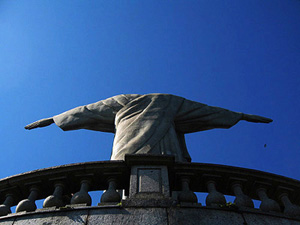

pirateaNdo…

um minuto (ou mais) de latidos (em volume alto) pela subida do pirata, o melhor amigo de ®esistro!
a essa hora, tirando onda com cartola e hendrix!
) :
(foto de ®)
nobs!
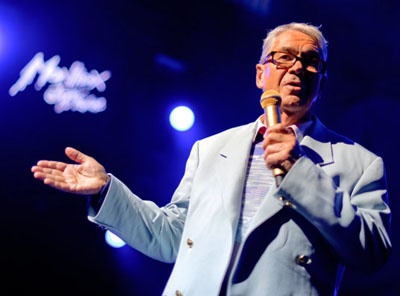
claude nobs
(1936 – 2013)
se alguém fizer a lista dos vinte caboclos mais importantes da música planetária nos últimos 50 anos,
certamente, o nome de claude estará incluído!
entre muitas e muitas traquinices, ele foi o criador do festival de jazz de montreux!
pelos palcos da “festa” (isso, a bagaça é uma festa) passaram 99% dos artistas que gostamos!
pode escolher à vontade!
tirando o fato de ser sido MEGA apaixonado pela música brasileira!
estive com claude em duas oportunidades:
no rock in rio (85), quando fiz umas fotocas dele lado a lado com roberta close no gargarejo do show de rod stewart…
e, em 1987, em montreux, na casa dele, num comes&bebes oferecido aos paralamas!
lembro de ter vagado horas pelos corredores… babando com a discoteca, livros & fotografias autografadas por miles, ella, hermeto… e uma, especial, de elvis costello!
PQParille… perdemos, estupidamente, um gigante da Música!
) :
segura um tasco da História:
The Montreux Jazz Festival was founded in 1967 by Claude Nobs, Géo Voumard and René Langel[1] with considerable help from Ahmet and Nesuhi Ertegün of Atlantic Records. The festival was first held at Montreux Casino. It lasted for three days and featured almost exclusively jazz artists. The highlights of this era were Keith Jarrett, Jack DeJohnette, Bill Evans, Soft Machine, Weather Report, The Fourth Way, Nina Simone, Jan Garbarek, and Ella Fitzgerald.
Originally a pure jazz festival, it opened up in the 1970s and today presents artists of nearly every imaginable music style. Jazz remains an important part of the festival. Today’s festival lasts about two weeks and attracts an audience of more than 200,000 people.
In the 1970s, the festival began broadening its scope, including blues, soul, and rock artists, for instance Marianne Faithfull, Led Zeppelin, Pink Floyd, Frank Zappa, Deep Purple, Prince and many others. Towards the end of the decade, the festival expanded even more, including music from all continents (with an emphasis on Brazilian music) and lasting a full three weeks. Santana came to Montreux for the first time in 1970; Van Morrison played in 1974 and 1980. Other artists included BB King, Gary Moore, Weather Report, Crossfire, Buddy Guy, Camarón de la Isla, Soft Machine, Chuck Berry, George Clinton and Parliament-Funkadelic, Eric Clapton, Luther Allison,Bo Diddley, Stan Getz, Airto Moreira, Joe Henderson, Dizzy Gillespie, Oscar Peterson, Charles Mingus, Etta James, Sonny Rollins, Son House, Count Basie, Chick Corea, Herbie Hancock, B.B. King, Gilberto Gil, Ray Charles, James Booker, Hermeto Pascoal, Mahavishnu Orchestra, Rory Gallagher, Stevie Ray Vaughan, Elis Regina,Les McCann, Eddie Harris, Pasadena Roof Orchestra, New Order, Jaco Pastorius, Ringo Starr and his All Starr Band, Toto, André Geraissati, Korni Grupa, Joe Satriani,Status Quo, and many more.
The initiator and—as of 2008—still the head organizer, Claude Nobs, has managed to bring an array of artists to Montreux, both established ones and newcomers